A community of practice for the neuroscience of memory
Aspirational Neuroscience is run by neuroscientists, for neuroscientists — balancing aspiration with realism.
Welcome, neuroscientists
The Aspirational Neuroscience (AN) community is currently run by neuroscientist Kenneth Hayworth (Janelia Research scientist and President of the Brain Preservation Foundation), along with a handful of other neuroscientists. If you are a student or professional neuroscientist, other scientist, or technical practitioner interested in these topics, please consider contacting us or joining our Journal Club.
The Brain Preservation Foundation’s mission is to investigate both the technical viability and value of human brain preservation for long-term static storage. The AN community evolved out of the BPF’s desire to create an independent Community of Practice and set of Incentive Prizes, specifically for neuroscientists and other scientists to share insights and research ideas on neural memory encoding. Graduate students and postdocs are a particular recruiting focus of our community.
To restate: the AN community is separate and distinct from the BPF community. AN’s purpose and membership are necessarily more specific and restricted; BPF’s are more general and speculative in nature. AN community members may or may not have any interest in the BPF’s mission, and each is independent of the other in purpose and practice. We welcome scientists to participate in either or both communities, as their interests dictate.
People
Two communities, distinct missions
Aspirational Neuroscience is independent of the Brain Preservation Foundation. Members may participate in either or both, as their interests dictate.
Advisory Board
We're advised by leading researchers in connectomics, memory, and computational neuroscience.
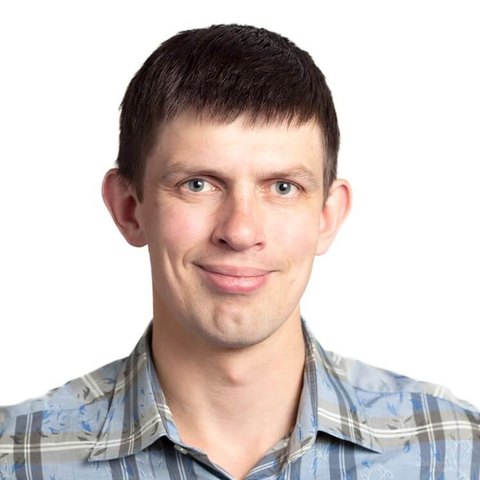
Anton Arkhipov
Investigator, Allen Institute
Anton leads the Bio-Realistic Modeling Team at the Allen Institute, building biophysically detailed computational models of brain circuits. His group is known for large-scale simulations of the mouse visual cortex that connect neural structure to activity.
Allen Institute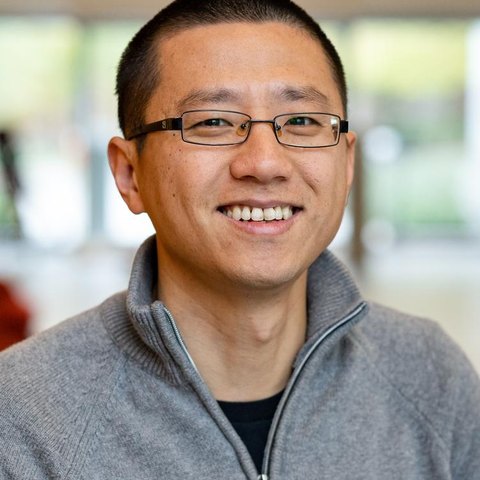
Zhihao Zheng
Associate Research Scholar, Princeton Neuroscience Institute
Zhihao is a connectomics researcher at Princeton who helped produce the first complete electron-microscopy volume of an adult fruit-fly brain. He now reconstructs mammalian circuits, including the hippocampus, at synaptic resolution.
Princeton Neuroscience Institute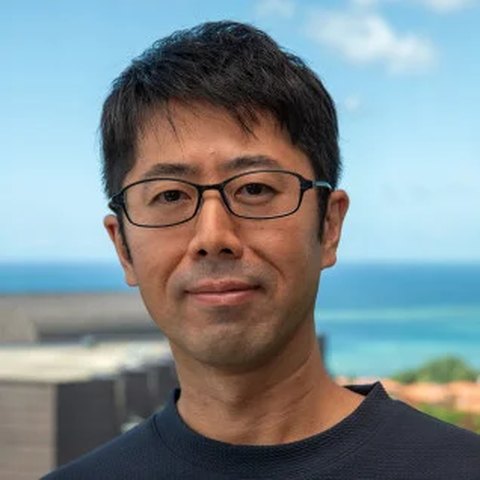
Kazumasa Tanaka
Assistant Professor, OIST
Kazumasa leads the Memory Research Unit at the Okinawa Institute of Science and Technology (OIST). His lab studies how memories are stored in the hippocampus, combining engram tagging with in vivo electrophysiology and imaging.
Okinawa Institute of Science and Technology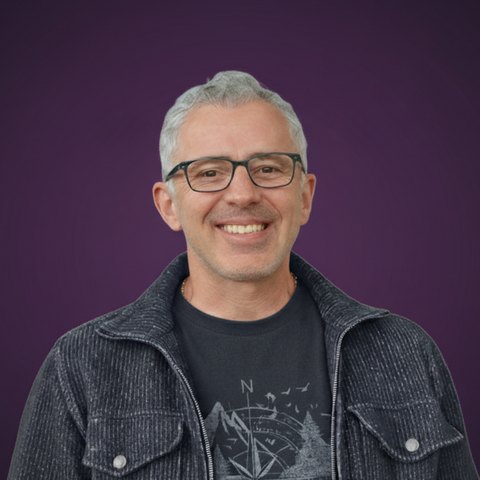
Arie Matsliah
Research Scientist, Princeton Neuroscience Institute
Arie is a research scientist at Princeton and a lead on the FlyWire project, where he built the FlyWire Codex that lets anyone explore the fly-brain connectome. He was a central contributor to the first complete wiring diagram of an adult fruit-fly brain.
FlyWire · Princeton Neuroscience Institute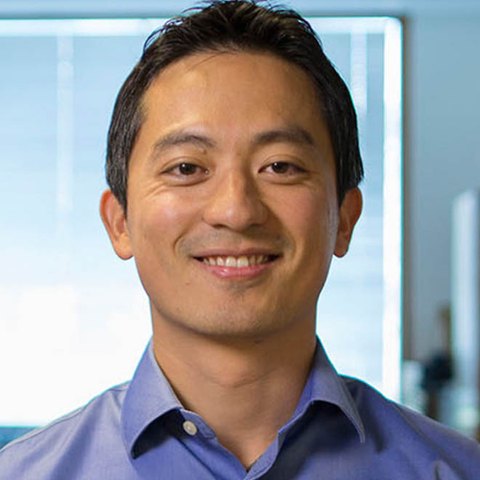
Takaki Komiyama
Professor of Neurobiology, UC San Diego
Takaki is a professor of neurobiology at UC San Diego and co-director of the Center for Neural Circuits and Behavior. His lab images and manipulates neural activity in mice to understand how the brain learns and stores motor skills.
UC San DiegoGet in touch
Interested in joining the community, nominating a paper, or supporting the prizes? We'd love to hear from you.